


The Right to Access Information Commission (RAIC) of Sierra Leone and the United Nations Educational Scientific and Cultural Organization (UNESCO) held a two-in-one information conference in Sierra Leone from Monday 28th to Wednesday 30th September 2026 at the Julius Maada Bio International Conference Center in Lungi on the theme “Upholding Information Integrity in the Digital Age: The Role of Access to Information in Addressing Information Disorder”.
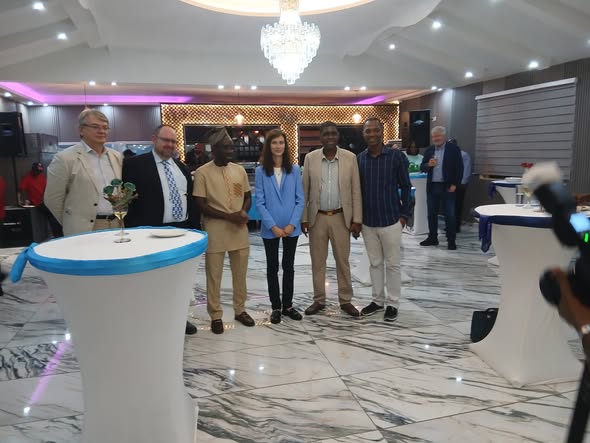
The joint information conference: International Conference of Information Commissioners (ICIC) and International Day for Universal Access to Information (IDUAI), kick-started with a welcome cocktail for both international and national delegates on Sunday 27th September where the Minister of Information and Civic Education, Hon Chernor Bah, and Dr. Ibrahim Seaga Shaw, the Chairman and Information Commissioner of the Right to Access Information Commission of Sierra Leone, welcomed guests and expressed delight for Sierra Leone to be the second African country to host the ICIC and to rarely host ICIC and IDUAI simultaneously.
The program proper started on Monday 28th September 2026 with an official opening address by Dr Mohamed Juldeh Jalloh, Vice President of Sierra Leone.
The Vice President reaffirmed the country’s commitment to access to information, democratic governance and information integrity as he officially opened the historic ICIC–IDUAI 2026 Conference.
Addressing delegates from across the world, the Vice President said the global community is living in a knowledge era in which access to credible information has become fundamental to democratic governance, accountability and citizens’ participation.
Reflecting on Sierra Leone’s journey from civil war to democratic consolidation, he said the country had come a long way from a period characterised by governance challenges and had embraced democracy and respect for human rights as central pillars of its recovery and development.
He highlighted the enactment of the Right to Access Information Act in 2013, ongoing efforts towards a Data Protection Law, and the repeal of the Criminal and Seditious Libel Law in 2020 as important steps taken to expand the frontiers of freedom of expression and access to information.
“From where we were to where we are today, we have made significant progress,” the Vice President said, noting that greater access to information empowers citizens to hold leaders accountable and contributes to the fight against corruption.
He, however, cautioned that expanding access to information must go hand-in-hand with addressing the complex challenges of the digital age. He said the global debate on access to information increasingly resonates with the need to build an information ecosystem that protects information integrity while ensuring that citizens continue to enjoy meaningful access to public information.
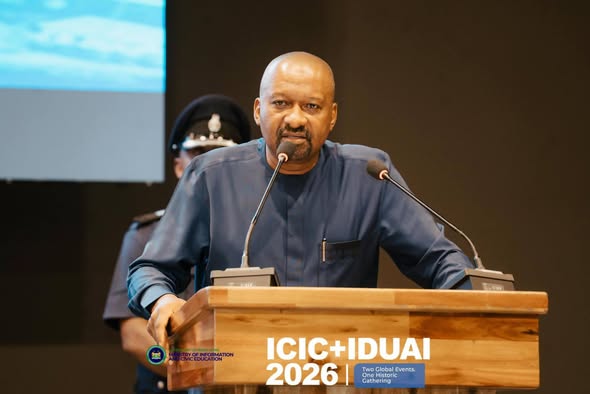
Minister of Information and Civic Education, Hon. Chernor Bah, reflected on Sierra Leone’s historic association with freedom and the country’s continuing efforts to strengthen openness and democratic governance. He underscored the importance of access to credible information in building public trust, empowering citizens and strengthening resilient democratic societies.
“We are at an advanced stage to enact into law the Data Protection and Access to Information bill that would see the Information Commission become an authority with broader mandate and more power to enforce data protection and right to information,” the Information Mister noted.
Chairman and Information Commissioner of the Right to Access Information Commission (RAIC), Dr. Ibrahim Seaga Shaw, welcomed delegates to Sierra Leone and expressed the country’s pride in hosting the landmark global gathering.
Dr. Shaw noted that access to information transcends national borders, particularly at a time when rapid technological advancement has created unprecedented opportunities while also presenting new challenges, including the manipulation and weaponisation of information.
He said these realities make international gatherings such as ICIC–IDUAI increasingly important. Dr. Shaw emphasised the need for both proactive and reactive disclosure of information, arguing that democratic resilience is strengthened when states open public data, reinforce access-to-information systems and establish appropriate regulatory frameworks.
He encouraged delegates to use the conference to exchange experiences, build stronger partnerships and align their efforts towards the shared goal of advancing access to information and protecting information integrity globally.
Speaking on behalf of the 2025 IDUAI host, Ms. Krizia Casey P. Avejan said they were proud to pass the hosting responsibility to Sierra Leone, describing the transition as symbolic of the progress and important milestones the international community continues to make in advancing universal access to information.
Representing the Federal Commissioner for Data Protection and Freedom of Information of Germany, host of the 2025 ICIC, Andreas Hartl described the combined conference as an important initiative for strengthening transparency, accountability and international cooperation. He stressed the value of Information Commissioners and governments working collaboratively to advance the right to information amid an increasingly complex global information environment.
Making the keynote address for day 2 [Tuesday 29th September], Professor David Cuillier of the University of Florida, United Kingdom, spoke on the impact of artificial intelligence on access to information and information integrity, calling on nations and institutions to use artificial intelligence responsibly to promote access to information and protect personal data.
Day 1 and Day 2 featured a high-level panel and several plenary and parallel panels which centered on addressing information disorder, proactive disclosure of information, good record-keeping practices, media and information literacy, public interest data and information integrity, credible environmental data for climate resilience and humanitarian responses, Credible data as a catalyst for achieving the sustainable development goals, new initiatives to strengthen access to information, global best practices for ensuring access to information and upholding and safeguarding information integrity, credible data for open governance and public sector reform, challenges of information disorder in Africa, effects of inequitable access to inform, youth leadership and digital community spaces in promoting information integrity, balancing access to information and data protection.
The Conference also featured the adopting of the Freetown ICIC/IDUAI Joint Declaration on Access to Information, a document that contains clear roadmap to promote and safeguard access to information.
Another critical highlight of the Conference was the official launch of the Records Management Training Manual for Africa by Adv. Pansy Tlakula – the chairperson of the African Network of Information Commissioners (ANIC). The document entails guides and best practices on how to collect, process, store, retrieve and manage records, especially for African nations.
As host of ICIC 2027, Canada’s Information Commissioner, Caroline Maynard, spoke on plans to host next year’s conference and encourage institutions and persons working on advancing right to information.
The 3-day Conference was climaxed by high-profile right to information regional meetings from Africa, Europe, North America, Asia, Australia and the Ibero-American Transparency and Access to Information Network. The regional engagements came out productive with shared experience and practice.
There were also closed ICIC administrative and closed NGO/CSO meetings with deliberations on fostering resilience and networking to promote and advance right to information and information integrity across nations. The NGO/CSO Meeting was organized by the Center for Law and Democracy and the Sierra Leone Access to Information CSO Coalition.
As the central them of the conference is on addressing information disorder and upholding information integrity, the UNESCO West Africa Office in Dakar, Senegal, held a productive technical consultative workshop on advancing information integrity in West Africa, drawing inspiration from the Praia Model Policy Framework. The workshop stressed the need for action, going beyond ideas on paper.
Reports of all plenary and parallel panels, done by the conference rapporteurs, were shared for delegates to have full reflection of the comprehensive deliberations of the panels.
Amazing cultural displays of Sierra Leone’s culture also form part of the conference.
What came out from the conference were detailed productive engagements and idea sharing on how to create synergies in addressing information disorder [misinformation, disinformation, fake news] and cultivating the culture of information integrity. Statements of delegates are indicative of the fact that insights from the conference are crucial in sanitizing the information ecosystem at national, regional, global levels.
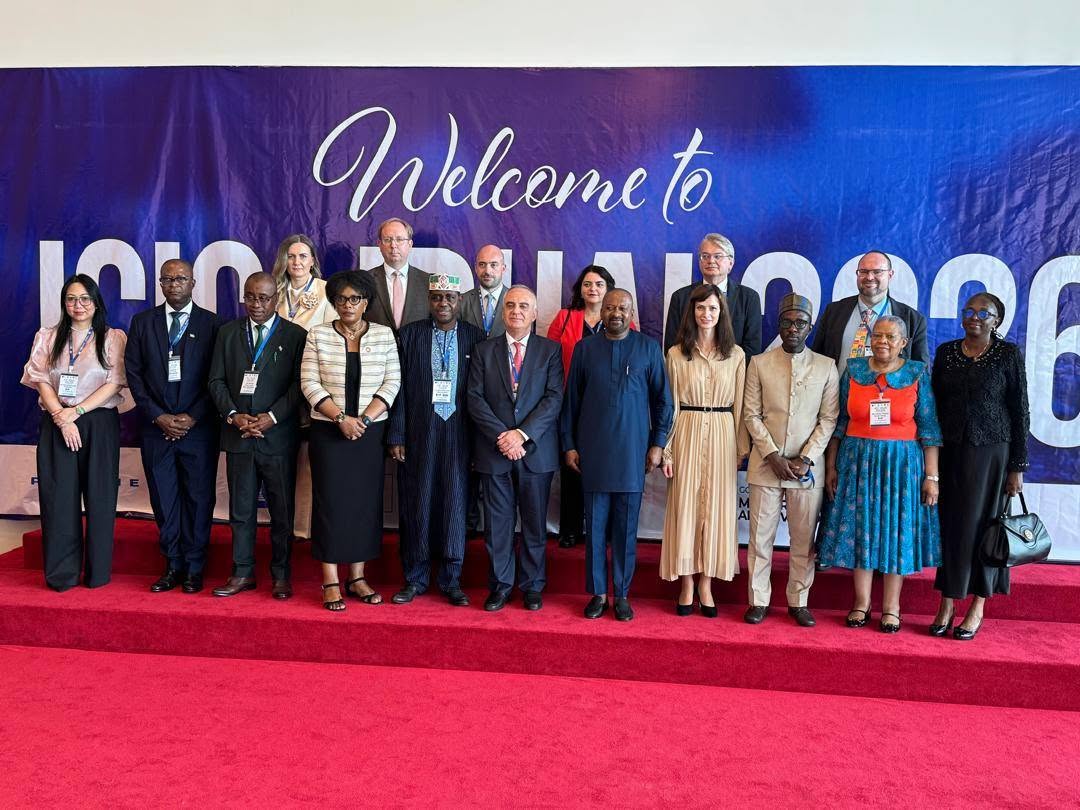
The twin conference brought together information commissioners, senior government officials, international organisations, civil society representatives, academics, media practitioners and access-to-information experts from across the world. Speakers described the convergence of the International Conference of Information Commissioners (ICIC) and the International Day for Universal Access to Information (IDUAI) as an important opportunity to deepen global cooperation on transparency, responsible digital governance and citizens’ access to credible information.
The next ICIC Conference will be held in Canada in 2027.
For media enquiries, contact:
Amara Thoronka
Public Information and Communications Officer
RAIC National Secretariat
+232 88 283632 /